The Future of Work: How Agentic AI Will Reshape Teams, Roles, and Global Collaboration
Agentic AI is rapidly transforming the landscape of work, introducing a new paradigm where intelligent systems do more than assist—they take initiative, make decisions, and operate with a degree of autonomy that reshapes how teams function, how roles are defined, and how global collaboration unfolds. As organizations increasingly adopt these advanced AI agents, understanding their impact is critical to navigating the future of work successfully.
What Is Agentic AI?
Agentic AI refers to artificial intelligence systems designed with agency—the ability to act independently, make decisions based on goals, and adapt dynamically to changing environments. Unlike traditional AI tools that rely heavily on human input and predefined instructions, agentic AI can evaluate complex scenarios, prioritize tasks, and even collaborate with human colleagues in real time.
This shift from reactive to proactive AI empowers businesses to rethink workflows, organizational structures, and collaboration models. It’s not just about automation; it’s about intelligent partnership.

How Agentic AI Will Reshape Teams
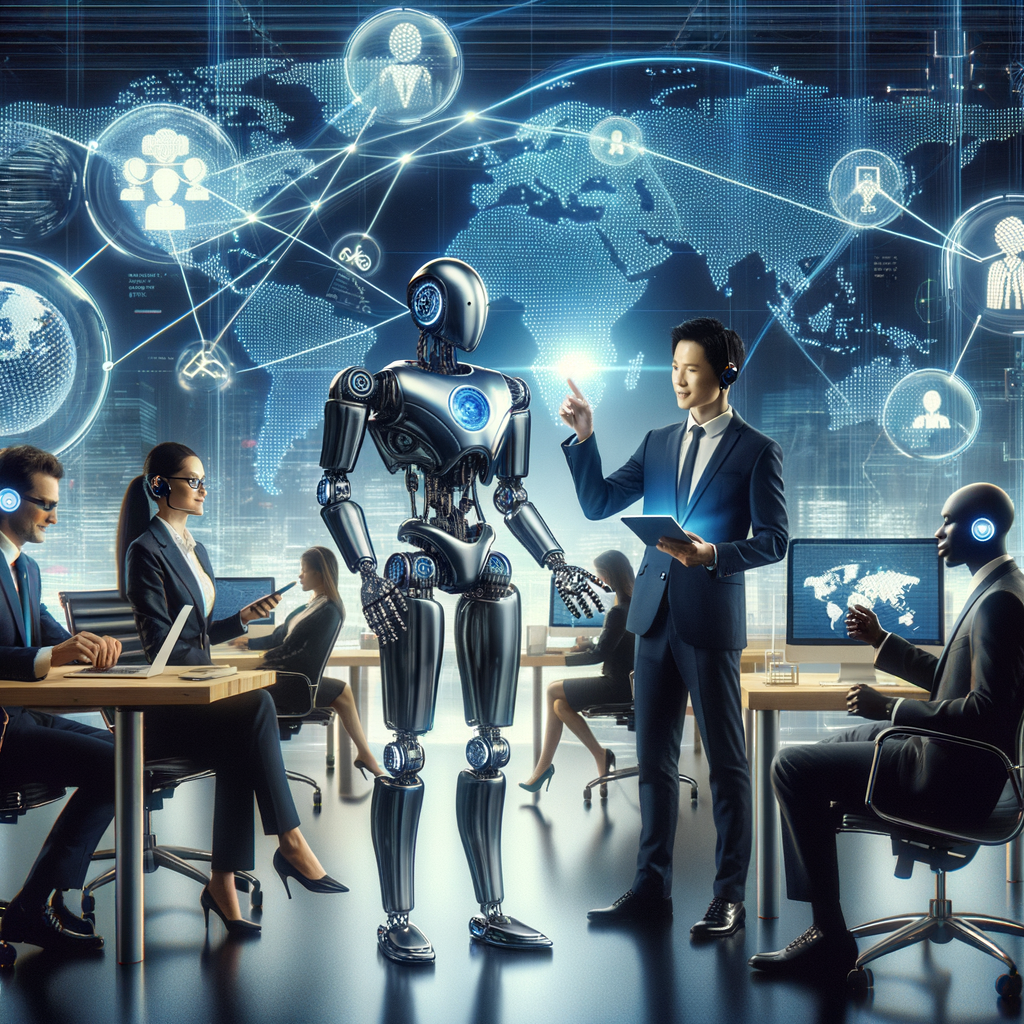
The integration of agentic AI into workplace teams will fundamentally alter team dynamics. Traditionally, teams are built around human skills and roles, with clearly defined responsibilities and hierarchies. Agentic AI introduces a hybrid workforce where AI agents become active team members.

- Enhanced Productivity: Agentic AI can handle repetitive or data-intensive tasks autonomously, freeing human workers to focus on creative problem-solving and strategic decision-making.
- New Roles and Collaboration Models: As AI agents take on more responsibility, new roles will emerge, such as AI supervisors, coordinators, or integrators who manage interactions between human and AI team members.
- Continuous Learning and Adaptation: Teams will become more agile, as agentic AI systems continuously learn and adapt from feedback, optimizing workflows and anticipating challenges before they arise.
The result is a more efficient, flexible, and innovative team structure where humans and AI agents complement each other’s strengths.
Redefining Roles in the Workplace
Agentic AI is not merely a tool but a collaborator, which means job descriptions and career paths will evolve. The future will see a blurring of boundaries between technical and non-technical roles.
- Augmented Decision-Making: Employees will increasingly rely on agentic AI to provide data-driven insights, predictive analytics, and risk assessments, enabling smarter decisions across departments.
- Focus on Human-Centric Skills: With AI handling routine or analytical tasks, human workers will emphasize empathy, creativity, leadership, and critical thinking—skills that AI cannot replicate.
- New Career Opportunities: Professions such as AI ethics consultants, human-AI interaction specialists, and AI workflow designers will become integral, requiring a blend of domain expertise and AI literacy.
This evolution will demand ongoing learning and adaptability from the workforce, encouraging lifelong education and interdisciplinary skill development.
Transforming Global Collaboration
Agentic AI will also revolutionize how organizations collaborate across borders, time zones, and cultures.
- Seamless Communication: AI agents capable of real-time translation, cultural context analysis, and sentiment detection will break down language barriers and misunderstandings, fostering more effective interactions.
- Around-the-Clock Workflow: Autonomous AI agents can work continuously, ensuring that projects progress even when human team members are offline, accelerating timelines and improving responsiveness.
- Distributed Decision-Making: Agentic AI can synthesize inputs from diverse teams worldwide, providing unified recommendations that respect local nuances while aligning with global objectives.
By enabling more fluid and inclusive collaboration, agentic AI will help companies harness global talent and innovation like never before.
Challenges and Considerations
Despite its potential, the adoption of agentic AI raises important challenges that organizations must address proactively.
- Ethical Concerns: Autonomous AI systems must be transparent, accountable, and aligned with human values to prevent biases, discrimination, or unintended consequences.
- Workforce Displacement: While agentic AI creates new opportunities, it may also disrupt existing jobs. Companies must invest in retraining and reskilling programs to support affected employees.
- Data Security and Privacy: As AI agents access vast amounts of sensitive information, robust security measures are essential to safeguard against breaches and misuse.
Addressing these issues thoughtfully will be key to realizing the benefits of agentic AI while minimizing risks.
Preparing for the Agentic AI-Driven Future
To thrive in a future shaped by agentic AI, organizations should start by fostering a culture of experimentation and learning.
- Invest in AI Literacy: Equip employees at all levels with the knowledge and skills to work alongside AI effectively.
- Redesign Workflows: Identify processes where agentic AI can add the most value and reconfigure roles to maximize human-AI synergy.
- Collaborate Across Functions: Bring together technologists, HR, ethicists, and business leaders to guide AI integration strategically and responsibly.
By embracing these practices, companies can unlock the full potential of agentic AI and build resilient, future-ready teams.
Conclusion
Agentic AI promises to be a game-changer in the future of work, reshaping teams, roles, and global collaboration in profound ways. By moving beyond simple automation to intelligent agency, these systems will enable new forms of partnership between humans and machines. While challenges exist, thoughtful adoption and continuous learning will empower organizations to harness agentic AI’s transformative power, driving innovation, inclusivity, and efficiency on a global scale. The future of work is not just about machines replacing tasks—it’s about building a smarter, more agile, and more human-centered workforce.