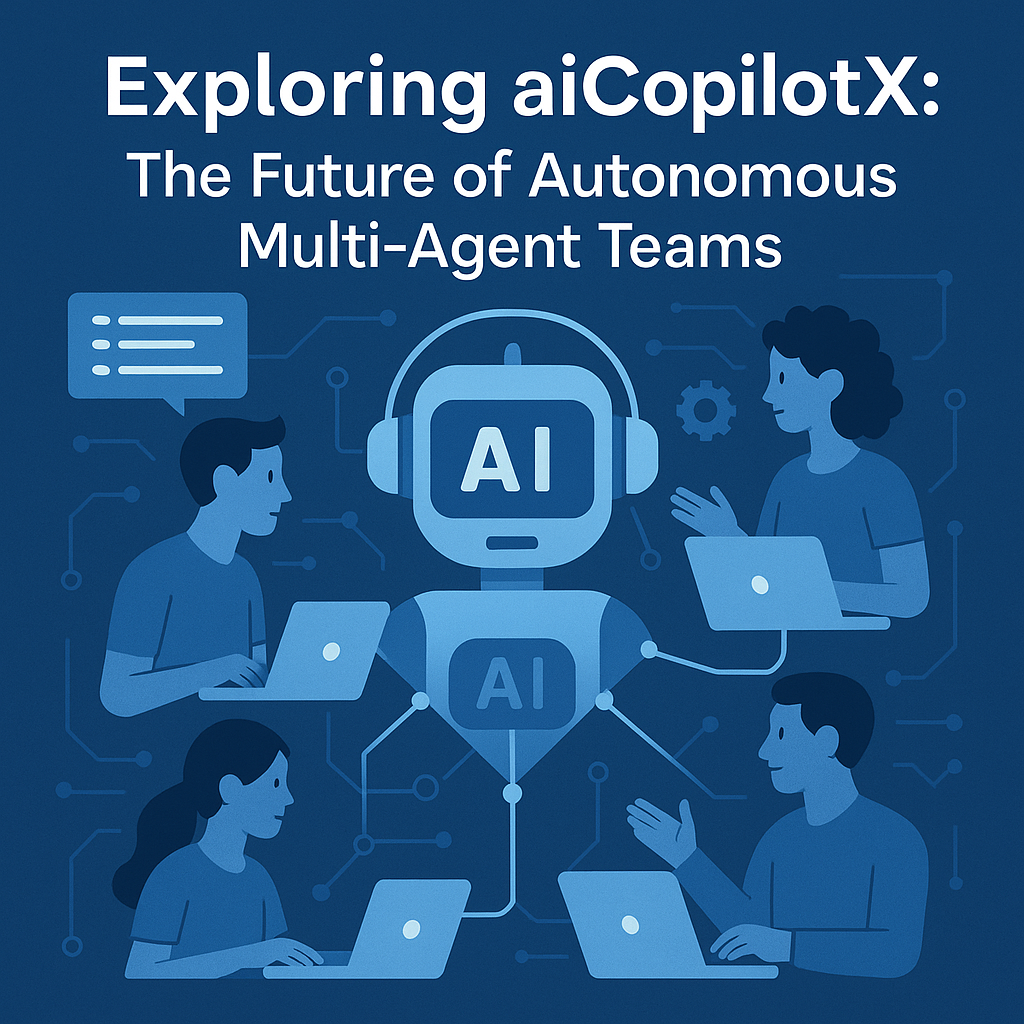
Exploring aiCopilotX: The Future of Autonomous Multi-Agent Teams
The Future of Autonomous Teams: aiCopilotX and the Rise of Multi‑Agent Collaboration
The landscape of team operations and management is rapidly changing with the advent of advanced technologies, notably through the development and implementation of AI solutions. Among these innovations, multi-agent systems like aiCopilotX are transforming how tasks are managed and executed by autonomous teams in various industries. This blog post explores the trend toward multi-agent collaboration, exemplified by aiCopilotX, and its implications for future workplaces.
Introduction to Multi-Agent Systems (MAS)
Multi-Agent Systems (MAS) represent a significant leap in the field of artificial intelligence, where multiple autonomous units (or agents) work together to achieve specific, often complex objectives. Each agent in the system has its own set of skills and capabilities but is designed to collaborate through sophisticated communication protocols to complete tasks more efficiently than traditional single-agent or human systems.
Key Characteristics of MAS include:
- Autonomy: Each agent can operate independently without human intervention.
- Local Views: No individual agent has a full global view of the system, yet it can still function effectively.
- Decentralization: There is no single controlling entity; decision-making is distributed among agents.
Enter aiCopilotX: A Pioneer in Autonomous Team Collaboration
aiCopilotX is a state-of-the-art multi-agent system designed to facilitate autonomous team operations across several sectors, including software development, logistics, and customer service. This platform integrates AI-powered agents that can plan, negotiate, and execute tasks with high efficiency and minimal human oversight.

Examples of aiCopilotX Applications:
- Software Development: aiCopilotX agents can autonomously manage different aspects of a software project—ranging from initial planning, coding, testing, to deployment—ensuring that each phase meets established timelines and quality standards.
- Logistics: In logistics, aiCopilotX agents optimize routes, manage inventory, and ensure timely delivery of goods, adapting in real-time to unexpected changes like traffic or weather conditions.
- Customer Service: In this sector, aiCopilotX enhances response times and personalization by ensuring that customer requests are handled promptly and efficiently, learning from interactions to improve future responses.
Benefits of Integrating aiCopilotX in Autonomous Teams
The deployment of MAS like aiCopilotX in collaborative environments offers numerous benefits that are setting new standards in operational efficiency and innovation.

Enhanced Efficiency and Productivity:
By automating routine tasks and optimizing complex operations, teams can focus on strategic thinking and creative problem-solving, thereby increasing overall productivity.
Scalability and Flexibility:
aiCopilotX can rapidly adapt to changing conditions and scale operations up or down without the typical constraints faced by human-only teams.
Improved Decision Making:
With AI agents capable of processing vast amounts of data in real-time, decisions are made faster and based on more accurate, comprehensive analytics.
Cost Reduction:
AI-driven systems like aiCopilotX can operate continuously without the need for breaks and are not prone to human error, significantly reducing operational costs.
Challenges in Implementing aiCopilotX
Despite the apparent advantages, integrating aiCopilotX into existing systems poses certain challenges that must be addressed to fully capitalize on its capabilities.
Technical Integration:
The complexity of AI technology requires significant expertise in both its development and deployment phases, necessitating skilled personnel and sophisticated infrastructure.
Cultural Adaptation:
Acceptance of AI-driven autonomous teams by human counterparts can be slow. There needs to be a strong focus on managing change within organizations to foster collaboration between human and AI agents.
Regulatory Compliance:
As AI continues to evolve, so too do the legalities surrounding its application. Ensuring that aiCopilotX complies with international standards and regulations can be a cumbersome process.
The Future Workplace and aiCopilotX
As enterprises increasingly adopt aiCopilotX and similar technologies, the structure and function of the workplace are poised for radical changes. We can anticipate a more dynamic and diverse working environment where humans and AI coexist and collectively evolve to meet business goals.
Organizations that understand and embrace the potential of AI-driven multi-agent systems will likely lead their respective industries in innovation and efficiency. Forward-thinking management practices that integrate technologies like aiCopilotX while maintaining an inclusive, human-centric approach, will be crucial in realizing the true potential of autonomous collaborative systems.
Conclusion
The development of multi-agent systems like aiCopilotX is an exciting frontier in artificial intelligence that holds the promise of transforming traditional team dynamics and operational strategies. With benefits like improved efficiency, scalability, and decision-making, these technologies are poised to become indispensable tools in the future workplace.
However, success in this new era requires more than just technological integration; it calls for strategic foresight, cultural shifts, and regulatory diligence. Businesses that can navigate these challenges effectively will not only survive but thrive in the ever-evolving landscape of work and technology.