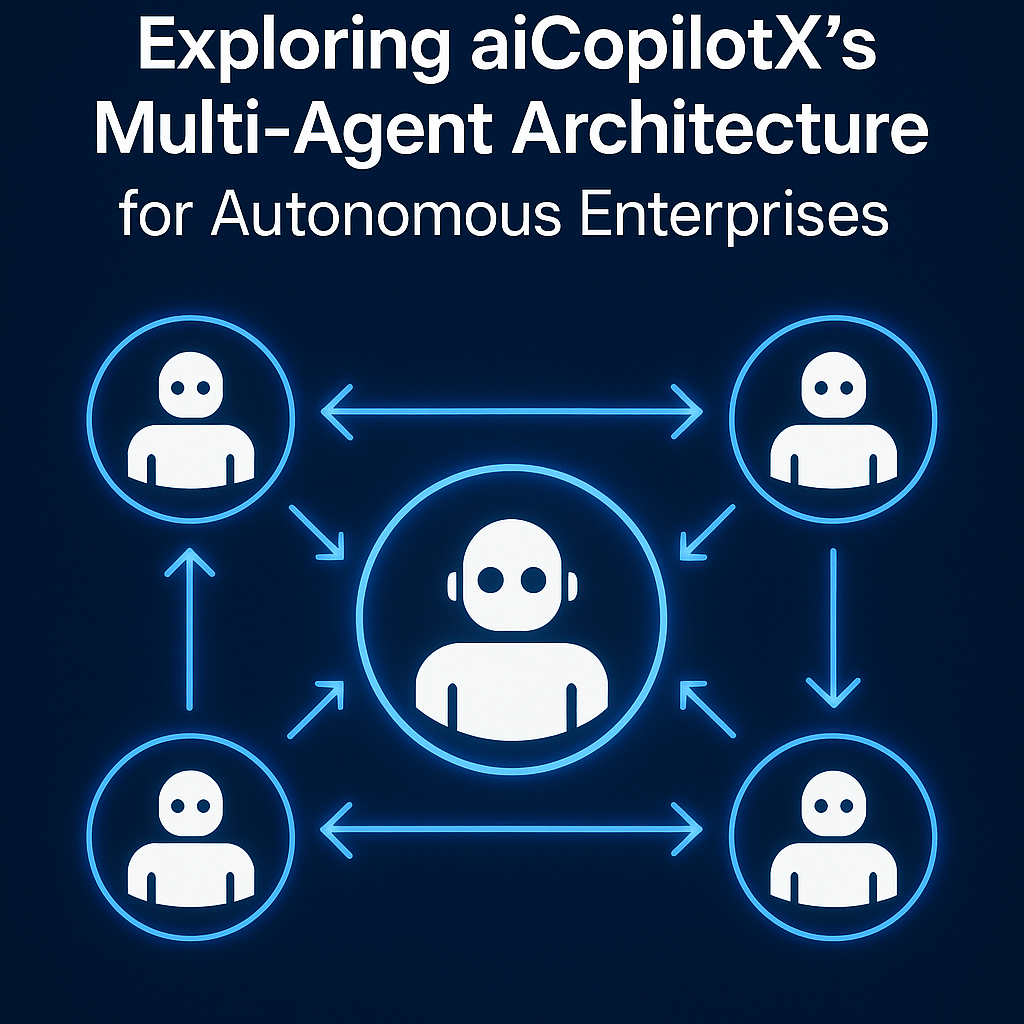
Exploring aiCopilotX’s Multi-Agent Architecture for Autonomous Enterprises
Building Autonomous Enterprises: A Deep Dive Into aiCopilotX’s Multi-Agent Architecture
In the rapidly evolving realm of business technology, the drive towards automation has become a cornerstone in modern enterprise strategy. Among the promising innovations to emerge is the aiCopilotX platform, renowned for its multi-agent architecture. This cutting-edge design not only supports but propels the development of autonomous enterprises. In this blog, we will delve into how aiCopilotX’s unique architecture fundamentally changes corporate automation and management.
Understanding Multi-Agent Systems (MAS)
Before dissecting aiCopilotX’s architecture, it’s crucial to grasp what a Multi-Agent System (MAS) entails. MAS refers to a system composed of multiple interacting intelligent agents. These agents can be either software programs or robots that work in an environment to solve complex issues that are beyond the capabilities of a single agent.
Key Features of MAS:
- Autonomy: Agents operate without direct human intervention.
- Local Views: Each agent has only partial information or limited understanding of the environment.
- Decentralization: There is no central control authority; agents operate based on local decisions.
These features make MAS particularly useful in scenarios where the problem is too large for a centralized processor, or where localized decisions are critical.

How aiCopilotX Harnesses MAS for Enterprise Autonomy
aiCopilotX integrates MAS to streamline complex business processes and automate decision-making, which are critical in achieving enterprise autonomy. Here’s how it leverages this structure.

Distributive Processing:
Each agent in aiCopilotX is responsible for a specific subset of tasks. By distributing tasks among multiple agents, the system can handle larger scales of operations efficiently.
Adaptive Learning:
The agents in aiCopilotX are equipped with machine learning algorithms allowing them to learn from outcomes and improve over time. This adaptive learning helps in refining the processes continuously.
Scalability:
With MAS, adding or removing agents as per requirement is seamless, which makes aiCopilotX highly scalable. Enterprises can start small and expand the functionalities as they grow.
Fault Tolerance:
The decentralized nature of aiCopilotX ensures that even if one agent fails, others can continue to operate without disruption, thereby enhancing the system’s reliability.
Applications of aiCopilotX in Real-World Business Scenarios
The multi-agent framework of aiCopilotX can be applied across various domains of an enterprise. Here are a few examples:
Supply Chain Management:
In supply chain management, aiCopilotX can optimize logistics, monitor inventory levels, forecast demand, and even handle supplier negotiations autonomously.
Customer Service:
AI agents can manage customer inquiries, provide personalized recommendations, and handle complaints, ensuring 24/7 service availability without fatigue.
Human Resources:
From screening resumes to managing employee satisfactions surveys and ensuring compliance with HR policies, aiCopilotX can automate many facets of human resources.
Financial Services:
The platform can automate transactions, manage risk, comply with regulations, and offer real-time financial advice to clients.
The Building Blocks of aiCopilotX Architecture
Agent Types in aiCopilotX:
- Operational Agents: Handle day-to-day operations such as data processing, transaction management, etc.
- Strategic Agents: Make high-level decisions by analyzing trends and generating insights.
- Learning Agents: Continuously learn from new data and update the system algorithms accordingly.
Communication Framework:
Agents communicate through a robust messaging system that ensures data integrity and security. The communication protocol allows agents to share insights, status updates, and alerts.
Integration with Legacy Systems:
aiCopilotX is designed to be compatible with existing IT infrastructure. This interoperability is crucial for enterprises that cannot afford to replace their current systems.
Challenges in Implementing aiCopilotX
Despite its advantages, deploying aiCopilotX comes with its set of challenges:
System Complexity:
Managing a large number of agents and ensuring they cooperate effectively without conflicts can be daunting.
Security Concerns:
With multiple agents sharing and processing data, robust security protocols must be in place to prevent data breaches.
Change Management:
Transitioning from traditional operations to an agent-based system requires significant changes in organizational processes and culture.
Conclusion
aiCopilotX’s multi-agent architecture offers a promising path toward building autonomous enterprises. By delegating decision-making to specialized agents, businesses can achieve higher operational efficiency, adaptability, and resilience. While the implementation might pose some challenges, the potential benefits in cost reduction, enhanced service delivery, and scalable growth make aiCopilotX a valuable asset for future-ready businesses. As autonomous technologies evolve, the role of platforms like aiCopilotX will undoubtedly become more central in enterprise strategy execution.