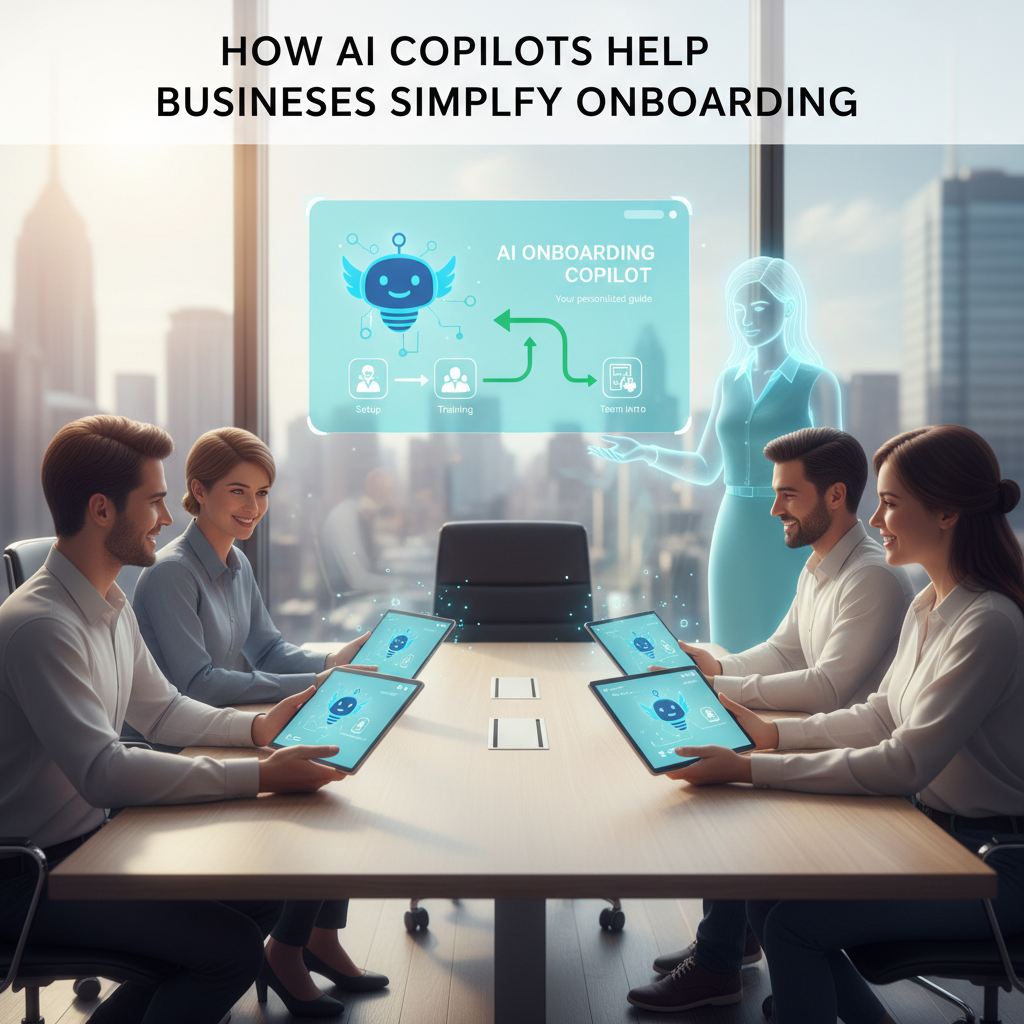
How AI Copilots Help Businesses Simplify Onboarding
Welcoming new team members is often an exciting milestone for any organization, yet the actual mechanics of employee onboarding and training can quickly become bogged down by administrative weight. Traditional orientation processes frequently demand countless hours from managers and human resources professionals, who must repeatedly compile documents, schedule orientation sessions, and answer repetitive queries. Fortunately, the rise of artificial intelligence is changing this paradigm entirely. By introducing intelligent assistants into the workplace, organizations are finding innovative ways to streamline operations and enhance the overall journey for every incoming hire.
Transforming the Traditional Onboarding Framework
Bringing a fresh talent up to speed requires a delicate balance of cultural integration, technical instruction, and policy comprehension. Historically, this meant drowning new hires in binders of text or lengthy corporate slide decks. Today, AI-powered tools act as dynamic digital companions that customize the transition period based on specific job roles and individual learning curves.
- Automating routine scheduling and document distribution tasks
- Generating personalized training paths tailored to specific skill gaps
- Providing instant summaries of complex internal company policies
Instead of relying on rigid, one-size-fits-all schedules, modern systems adapt in real time. They track progress markers and suggest supplementary resources the moment a team member begins to struggle with a new concept.

Accelerating Knowledge Acquisition and Training
Training programs often suffer from information overload. When individuals try to absorb weeks of operational data in just a few days, retention rates drop significantly. Intelligent assistants mitigate this challenge by serving as on-demand reference points that provide accurate answers precisely when they are needed.

Instant Access to Internal Expertise
New employees frequently hesitate to ask basic questions out of fear of disturbing busy colleagues. An intelligent assistant provides a safe, conversational interface where recruits can ask anything—from software navigation steps to brand guidelines—and receive immediate, context-aware responses sourced directly from verified company documentation.
Scaling Mentorship and Support
While human mentorship remains irreplaceable, veteran staff members often find their schedules overwhelmed by constant introductory queries. By offloading routine educational tasks and procedural questions to a virtual helper, businesses free up human mentors to focus on high-level coaching, cultural integration, and strategic relationship building.
Measurable Benefits for Growing Organizations
Implementing intelligent workplace technology yields clear advantages that extend far beyond simple administrative convenience. Organizations that integrate these systems typically experience faster time-to-productivity metrics, meaning new additions start contributing to core business goals much earlier in their tenure. Furthermore, standardizing the initial phase guarantees that every participant receives consistent, high-quality instruction regardless of department or geographical location. Ultimately, leveraging these smart frameworks creates a supportive, frictionless environment that fosters long-term retention and overall workplace satisfaction.