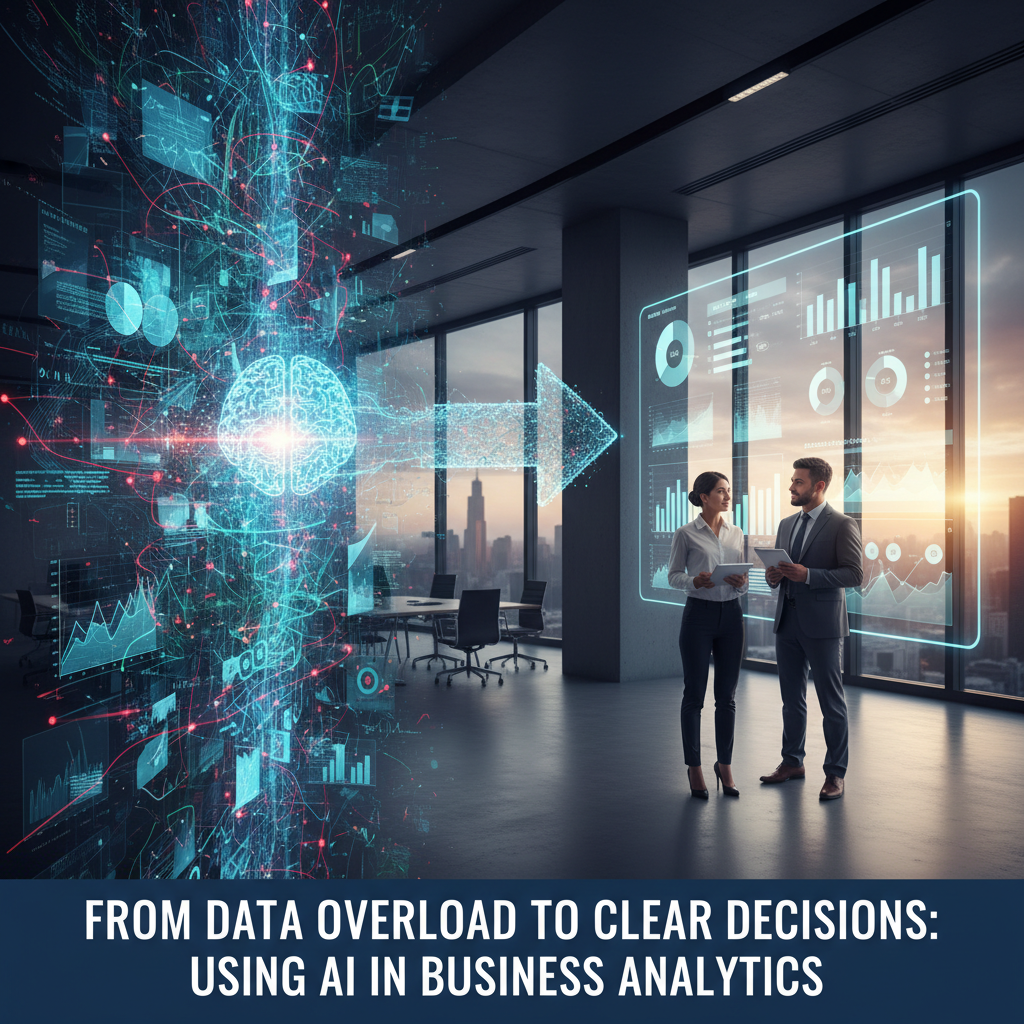
From Data Overload to Clear Decisions: Using AI in Business Analytics
Navigating the Modern Data Deluge
Every single day, modern organizations generate mountains of information. From customer interactions and website traffic to financial transactions and backend system logs, digital touchpoints create a continuous flood of metrics. While collecting this information has never been easier, making sense of it has become an overwhelming hurdle for leadership teams. Instead of empowering leaders, this vast accumulation often leads to analysis paralysis, where critical insights remain buried beneath layers of noise.
The Hidden Costs of Fragmented Information
The primary barrier to effective strategy is rarely a lack of information; rather, it is the presence of isolated silos and chaotic reporting structures. Customer relationship management tools, financial software, and operational databases rarely communicate seamlessly out of the box. Consequently, analysts spend countless hours manually cleaning spreadsheets, reconciling formatting discrepancies, and trying to patch together a unified picture of company performance.
This manual workflow introduces significant bottlenecks:

- Delayed reporting cycles that result in reactive rather than proactive management.
- Conflicting metrics across departments creating organizational friction.
- Missed market opportunities due to slow interpretation speeds.
How Artificial Intelligence Restores Clarity
Introducing machine learning algorithms and intelligent automation changes the equation entirely. Rather than forcing teams to manually query databases and build static charts, artificial intelligence systems continuously monitor enterprise platforms in real time. These tools excel at recognizing patterns, identifying anomalies, and surfacing hidden correlations that human analysts might easily overlook during routine checks.

Automated Data Aggregation and Normalization
One of the most powerful applications of modern algorithms is the automation of data preparation. By connecting disparate software ecosystems, intelligent platforms standardize formats and establish relationships across datasets automatically. This eliminates the tedious manual extraction processes that stall productivity, creating a single source of truth that every department can trust.
Predictive Insights and Proactive Strategies
Traditional business intelligence looks backward, telling organizations what happened last quarter or last year. In contrast, advanced analytical models leverage historical trends to forecast future outcomes, helping executives anticipate market shifts before they occur. Whether predicting equipment maintenance needs, forecasting customer churn, or optimizing inventory levels, proactive intelligence allows businesses to stay ahead of competitors.
Embracing the Future of Intelligent Leadership
Transitioning from endless spreadsheets to streamlined, automated intelligence does not require an overhaul of your entire tech stack overnight. Organizations can begin by identifying their most stubborn operational bottlenecks—such as disconnected customer data or sluggish financial reporting—and integrating smart tools targeted specifically at those areas. By embracing these technologies, leaders can finally conquer information overload and foster a culture built on swift, confident, and data-backed decisions.