Beyond Chatbots: AI Copilots Driving Real Action
Remember when customer service chatbots felt like talking to a brick wall? For years, automated messaging systems promised revolutionary efficiency, yet they often left users frustrated by rigid decision trees and an inability to solve complex problems. Today, the technological landscape has shifted dramatically. We are moving past simple conversational interfaces and entering the era of AI copilots—systems designed not just to chat, but to execute complex workflows, connect disparate software platforms, and turn everyday business dialogues into concrete actions.
This evolution represents a fundamental change in how modern organizations operate. Rather than forcing employees to manually transfer data between applications or spend hours compiling reports, intelligent copilots listen, understand context, and proactively execute tasks across the digital ecosystem. Let us explore how this next generation of artificial intelligence is redefining productivity.
The Limitation of Traditional Chatbots
To truly appreciate the power of modern copilots, we must first understand why traditional chatbots fell short. Early conversational agents operated on predefined scripts and keyword recognition. If a user deviated even slightly from expected phrasing, the bot would fail. Furthermore, these tools operated in silos. They could answer basic FAQs, but they could not update your CRM, generate an invoice, or schedule a cross-functional team meeting.

Business conversations are inherently messy and multifaceted. A single discussion about a client account might touch on sales pipeline updates, technical support tickets, and billing adjustments. Traditional tools lacked the reasoning capabilities to handle such fluidity, leaving human workers to pick up the slack and perform the tedious integration work.

Enter the Era of Action-Oriented Copilots
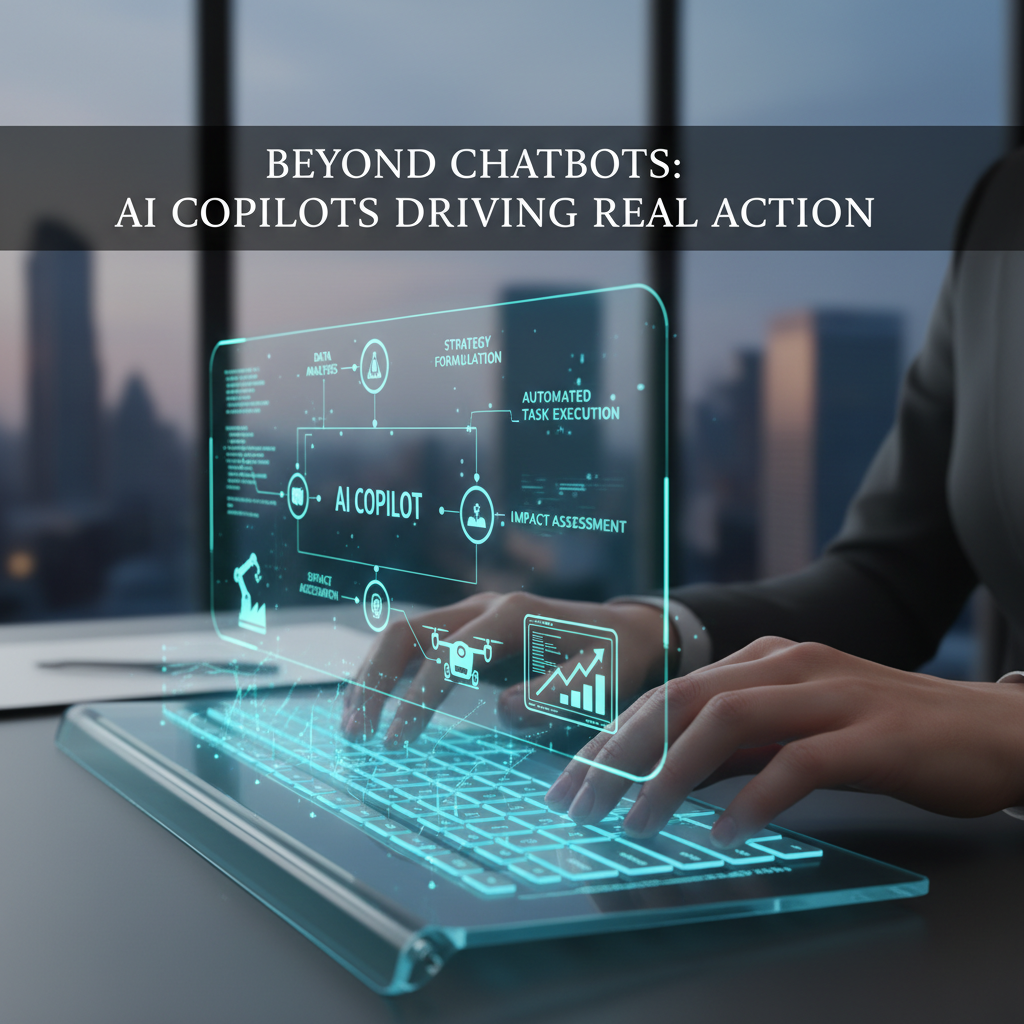
Modern AI copilots leverage advanced large language models combined with robust API integrations to bridge the gap between dialogue and execution. Instead of merely suggesting a response, these systems understand intent and possess the autonomy to carry out multi-step processes.
Consider a typical post-sales review meeting. In the past, someone had to record notes, assign action items in project management software, draft follow-up emails, and update the CRM manually. With an advanced copilot integrated into the workspace, the AI listens to the conversation, extracts key decisions, creates tasks in your preferred project tracking tool, drafts personalized emails to attendees, and logs the meeting summary in your database—all before the video call has even ended.
Key Capabilities Driving the Shift
- Contextual Understanding: Copilots comprehend nuance, industry terminology, and historical company data to make intelligent recommendations.
- Cross-Platform Execution: Rather than living in a separate chat window, they integrate directly into enterprise software suites like Slack, Microsoft Teams, Salesforce, and ERP systems.
- Proactive Problem Solving: Instead of waiting for commands, modern systems can anticipate bottlenecks and suggest operational adjustments.
Transforming Enterprise Workflows
The transition from passive chatbots to active partners is reshaping entire departments. In human resources, copilots manage onboarding workflows by answering employee queries while simultaneously submitting paperwork to payroll systems. In supply chain management, they monitor shipping delays discussed in vendor emails and automatically initiate alternative routing requests.
This shift liberates human talent from routine administrative burdens. When intelligent agents handle the heavy lifting of data entry and task coordination, employees can focus on strategic thinking, creative problem-solving, and relationship building.
Looking Ahead: The Autonomous Future
As artificial intelligence continues to mature, the boundary between conversation and execution will blur even further. We are moving toward a workplace where talking to your software is as effective as clicking, dragging, and typing manually. By turning routine discussions into immediate, automated actions, AI copilots are not just upgrading our communication tools—they are fundamentally redesigning the modern business landscape.