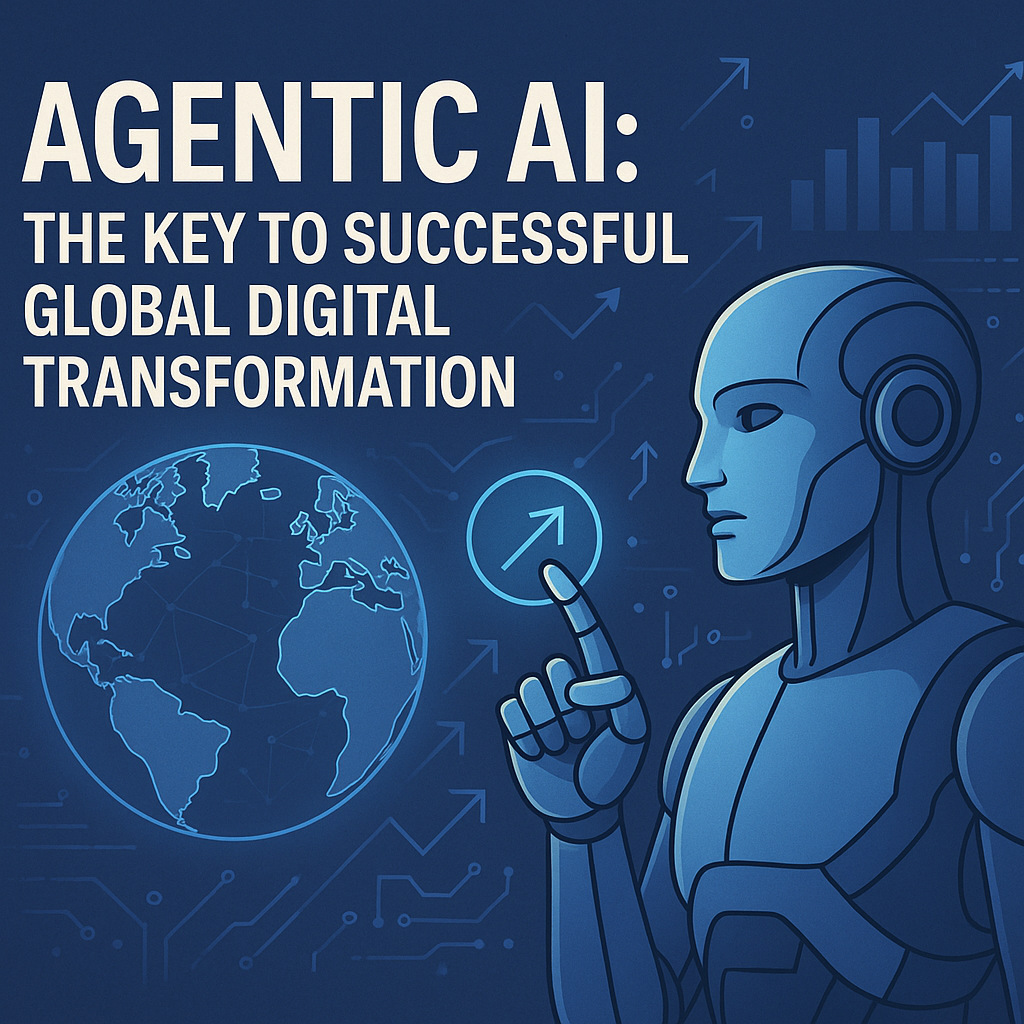
Agentic AI: The Key to Successful Global Digital Transformation
Why Agentic AI Is the Missing Link in Global Digital Transformation
In our rapidly advancing digital landscape, artificial intelligence (AI) continues to reshape how businesses operate, nations govern, and communities interact. However, the latest stride in AI technology, known as agentic AI, promises to further revolutionize this digital evolution. Agentic AI, by definition, refers to systems designed to act with agency – autonomously making decisions and performing tasks based on given objectives. This article delves into why agentic AI is pivotal for global digital transformation, enhancing efficiency, innovation, and adaptability on a worldwide scale.
What is Agentic AI?
Unlike traditional AI which primarily focuses on specific tasks – such as data processing or pattern recognition – agentic AI operates on a broader scale. It possesses the capability to undertake complex decision-making processes and execute actions aligned with predetermined goals and ethics.
Examples of agentic AI include:

- Autonomous vehicles: Cars that decide the safest route and adapt to real-time traffic conditions.
- Smart grids: Energy systems that autonomously manage supply according to fluctuations in demand and supply, enhancing sustainability.
- Advanced healthcare systems: AI that can diagnose diseases and customize patient treatment plans autonomously.
Driving Forces Behind the Adoption of Agentic AI
The push towards agentic AI isn’t just about technological advancements; it’s driven by critical needs spanning several sectors.

1. Efficiency Enhancements
By automating decision-making processes, agentic AI can drastically increase efficiency. It reduces the need for human intervention, which not only speeds up operations but also minimizes human error.
2. Resolving Complexity
In industries such as healthcare, finance, and climate science, the variables involved in decision-making are often so complex that they surpass human analytical capacities. Agentic AI can process vast arrays of data quickly, providing solutions or initiating actions that would be too complicated or too vast for humans to handle effectively.
3. Personalization at Scale
From marketing strategies to custom education plans, personalization is key to customer satisfaction and individual success. Agentic AI can analyze individual preferences and behaviors, allowing for mass customization without the traditional cost associated with it.
Impact on Different Sectors
Financial Sector
Agentic AI transforms financial services through algorithmic trading, personalized banking, and fraud detection systems that act autonomously to mitigate risks and enhance customer service.
Example:
Fintech companies use agentic AI to assess loan applications, where the AI system analyzes the applicant’s financial history, current market trends, and more, to make decisions autonomously about loan approval.
Healthcare
In healthcare, agentic AI is a game-changer by enabling more precise diagnostics, personalized treatment plans, and management of healthcare resources.
Example:
AI systems at hospitals can autonomously schedule appointments for patients based on urgency, healthcare provider availability, and patient location, thereby optimizing the entire healthcare delivery system.
Manufacturing
Agentic AI in manufacturing leads to smarter supply chain management and predictive maintenance, improving production efficiency and reducing downtimes.
Example:
AI-driven robots in assembly lines can decide when to order new supplies based on predictive analytics of inventory levels and production speed, ensuring the manufacturing process is never disrupted.
Education
Agentic AI can personalize learning experiences, adapt resources to meet student needs, provide real-time feedback, and manage administrative tasks, allowing educators to focus more on teaching rather than bureaucracy.
Example:
AI systems in schools analyze student performance and automatically adjust curriculum pacing or suggest additional resources to help students achieve optimal learning outcomes.
Challenges and Considerations
Despite its potential, the integration of agentic AI raises significant challenges and considerations:
1. Ethical Concerns
The autonomous nature of agentic AI necessitates robust ethical frameworks to prevent biases and ensure that decisions are made with integrity and fairness.
2. Cybersecurity Risks
With increased autonomy, agentic AI systems could become prime targets for cyber-attacks, potentially leading to disastrous outcomes if security measures are not adequately enforced.
3. Job Displacement
The fear of job losses due to automation remains significant. It’s vital to balance AI integration with job creation strategies that aim for a future where AI and humans work hand in hand.
Conclusion
As the global digital transformation continues to unfold, agentic AI stands out as a crucial player. By empowering systems to act autonomously yet ethically, agentic AI not only enhances operational efficiencies but also brings profound benefits to personalized services and complex decision-making processes. However, successfully harnessing its potential requires addressing ethical, security, and employment challenges. With thoughtful integration, agentic AI will be instrumental in shaping a more efficient, responsive, and sustainable future. As we stand on the brink of this technological leap, the focus must be not just on what AI can do, but on how it should be done.