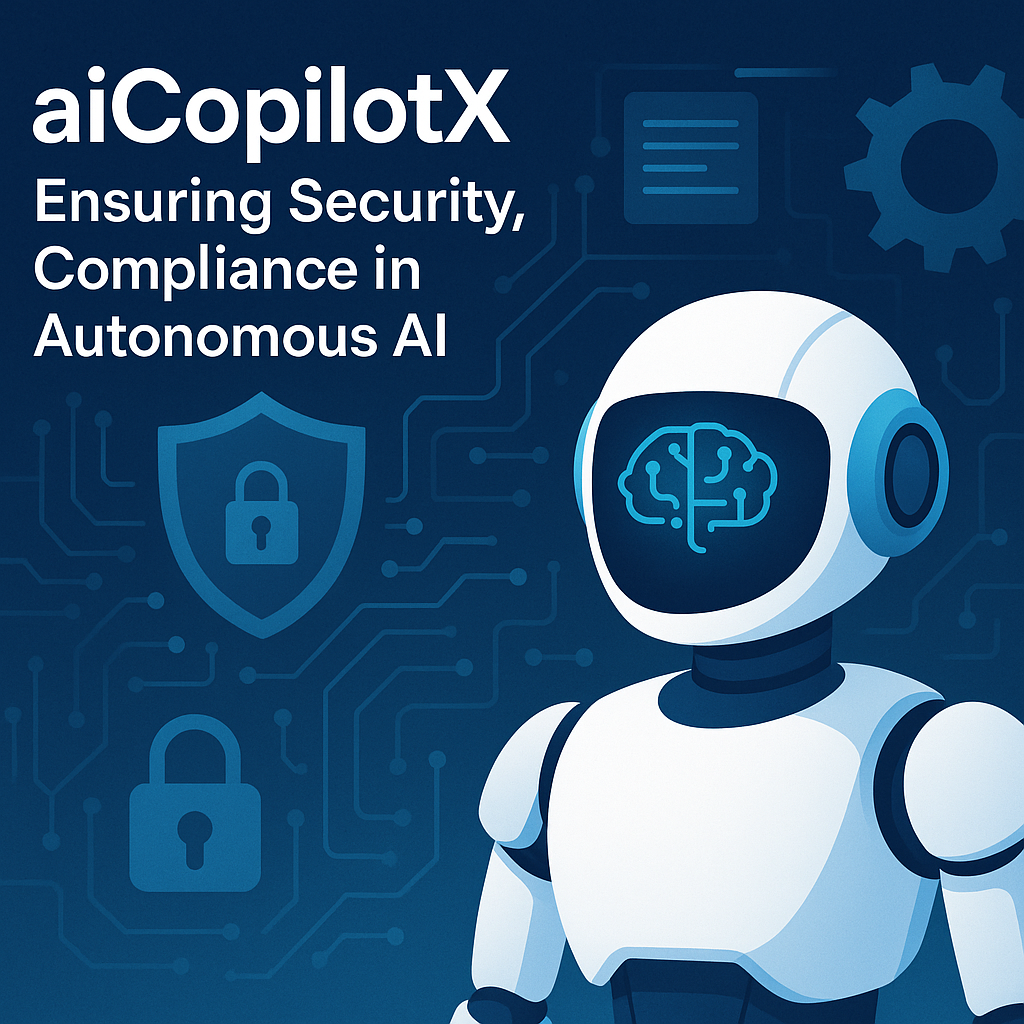
aiCopilotX: Ensuring Security, Compliance in Autonomous AI
How aiCopilotX Ensures Security, Compliance, and Reliability in Autonomous AI Systems
In today’s rapidly evolving tech landscape, the need for robust autonomous artificial intelligence (AI) systems is becoming more pronounced. From self-driving cars and smart healthcare to automated financial tools, AI is reshaping how we interact with the world. However, as these technologies play increasingly vital roles in critical sectors, ensuring their security, compliance, and reliability has become imperative. This is where aiCopilotX comes into the picture. Here, we explore how aiCopilotX addresses these challenges and ensures that autonomous AI systems are both effective and safe.
1. Understanding the Challenges in Autonomous AI Systems
Security Risks
Autonomous AI systems are often vulnerable to various security threats, including data breaches, hacking, and malicious AI inputs. These threats can lead to severe consequences, especially in systems related to healthcare and autonomous driving.
Compliance Issues
Regulatory compliance is another significant challenge. As laws and regulations continuously evolve, keeping autonomous AI systems within legal boundaries is crucial but complex, particularly in globalized markets with varying local laws.

Reliability and Accuracy
Reliability refers to the consistent performance of AI systems under various conditions. Inaccuracy or errors in autonomous decisions can result in ineffective solutions, or worse, endanger human lives.

2. AiCopilotX’s Approach to Ensuring Robust Security
Advanced Encryption and Secure Data Practices
To protect against data breaches and unauthorized access, aiCopilotX implements advanced encryption techniques and secure data handling practices. For example:
- Data at rest is encrypted using industry-standard protocols such as AES-256.
- Data in transit is secured through TLS/SSL channels.
- Access controls and authentication mechanisms are rigorously applied to ensure that only authorized personnel can access sensitive information.
Real-Time Threat Detection and Response
aiCopilotX employs sophisticated machine learning algorithms to detect potential threats in real-time. This proactive approach allows for immediate identification and mitigation of risks. The system’s capabilities include:
- Anomaly detection to spot unusual patterns that may indicate a security breach.
- Automated threat response systems that can isolate affected components and prevent the spread of malicious attacks.
Regular Security Audits and Updates
Continuous improvement in security is a pillar of aiCopilotX. The platform undergoes regular security audits conducted by third-party experts, which help identify and rectify potential vulnerabilities. Further, aiCopilotX is always updated to defend against the latest threats and to comply with new security standards and regulations.
3. Compliance With Global Regulative Standards
Automated Compliance Frameworks
aiCopilotX integrates automated compliance checks that align with international standards such as GDPR in Europe, HIPAA in the USA, and other regulatory frameworks depending on the operational region. These automated systems ensure:
- Data privacy and user consent protocols are adhered to stringently.
- Compliance logs and audit trails are maintained meticulously, providing transparent oversight.
Continuous Learning and Adaptation
As regulations evolve, aiCopilotX’s algorithms are designed to learn and adapt through continuous updates. This adaptability ensures that all autonomous AI systems using aiCopilotX remain compliant over time, no matter how or when regulations change.
Collaboration with Regulatory Bodies
aiCopilotX collaborates closely with government and regulatory bodies worldwide. This collaboration helps anticipate regulatory changes and prepare the systems accordingly, thereby preventing compliance risks.
4. Guaranteeing Reliability and Accuracy in Autonomous Decisions
Rigorous Testing and Validation
Before deployment, aiCopilotX subjects all systems to extensive testing and validation processes. These include:
- Simulation-based testing to assess how AI decisions hold up under various scenarios.
- Real-world testing to ensure the AI can handle actual operational conditions effectively.
High Fault Tolerance
aiCopilotX designs systems with high fault tolerance, capable of maintaining operational stability even under unexpected conditions. Redundant systems and fallback protocols are standard, ensuring that critical operations can continue without interruption even if part of the system fails.
Continuous Monitoring and Performance Optimization
Post-deployment, aiCopilotX continues to monitor autonomous systems to ensure they perform as expected. Performance data is analyzed constantly to identify any areas for improvement. Moreover, AI models are fine-tuned in response to this data, enhancing system accuracy and reliability over time.
Conclusion
In conclusion, aiCopilotX’s multifaceted approach to security, compliance, and reliability not only meets but often exceeds the current industry standards for autonomous AI systems. By prioritizing advanced security protocols, stringent compliance adherence, and rigorous reliability checks, aiCopilotX ensures that its autonomous AI solutions are both safe and effective, ready to face the challenges of today’s and tomorrow’s technological landscapes. As autonomous technologies grow more integral to our daily lives, the role of comprehensive AI management platforms like aiCopilotX will become even more crucial.