
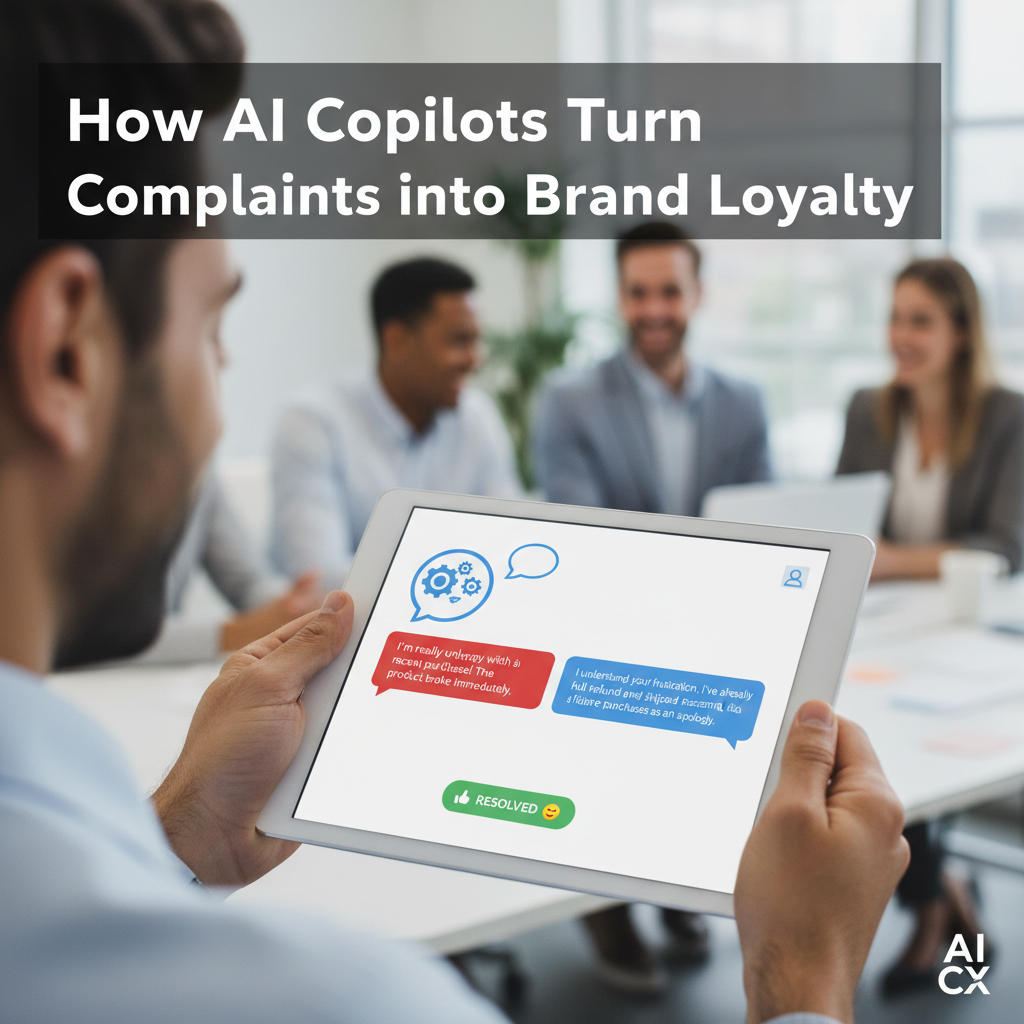
How AI Copilots Turn Complaints into Brand Loyalty
The New Paradigm of Customer Recovery
In today’s hyper-competitive marketplace, customer expectations soar higher than ever before. Consumers demand instant answers, personalized solutions, and seamless digital interactions around the clock. When things go wrong, a frustrated customer can quickly voice their dissatisfaction online, making rapid service recovery vital. Rather than viewing complaints as operational burdens, forward-thinking enterprises now look at negative feedback through a strategic lens. By leveraging intelligent technology, brands can successfully navigate friction points and transform routine grievances into powerful catalyst moments for lasting brand advocacy.
Handling grievances effectively has always been a cornerstone of strong retention strategies. However, human support teams often face overwhelming ticket volumes, causing response times to lag and customer sentiment to drop. This is where modern artificial intelligence steps in to change the game. An advanced assistant acts as a collaborative digital teammate, empowering service agents to resolve issues swiftly, accurately, and with deep contextual empathy.
Understanding the Anatomy of a Complaint
Every customer complaint tells a story about a gap between expectation and reality. Traditionally, support agents spent valuable minutes—sometimes hours—digging through disparate systems to understand a client’s history. During high-stress moments, this delay only compounds client frustration. Intelligent support assistants streamline this discovery phase by instantly pulling relevant data from CRM platforms and knowledge bases.

- Instant retrieval of historical purchase data and past ticket logs
- Real-time sentiment analysis to gauge emotional tone
- Automated summarization of complex technical threads
- Suggested response templates focused on de-escalation
By equipping human representatives with synthesized insights, organizations remove the administrative friction that stalls resolution. Agents no longer waste time hunting for information, leaving them completely free to focus on active listening and compassionate problem-solving.

Accelerating Resolution and Deepening Trust
Speed is a critical factor when managing negative feedback. When a client receives a prompt, accurate, and empathetic response, their perception of the brand often shifts dramatically. In many cases, a well-handled service recovery can build even stronger brand loyalty than a flawless initial transaction—a phenomenon known in behavioral economics as the service recovery paradox.
Intelligent assistants help achieve this by drafting precise, empathetic communication tailored specifically to the individual’s situation. Instead of generic copy-paste apologies, these tools draft contextual replies that address specific pain points directly. This personalization demonstrates genuine attentiveness, reassuring the consumer that their voice matters and that their business is valued.
Scaling Proactive Insights Across the Enterprise
Beyond individual ticket resolution, smart automation aggregates feedback data at scale to identify systemic product or service flaws. Instead of treating complaints as isolated incidents, leadership teams can analyze recurring trends across thousands of interactions. This macro-level visibility allows companies to fix underlying issues before they impact a broader audience, turning frontline feedback into a proactive engine for continuous improvement and long-term customer retention.