The Agentic Revolution: Building Autonomous Apps With IBM Watson, Azure AI, Google Vertex, and AWS Bedrock
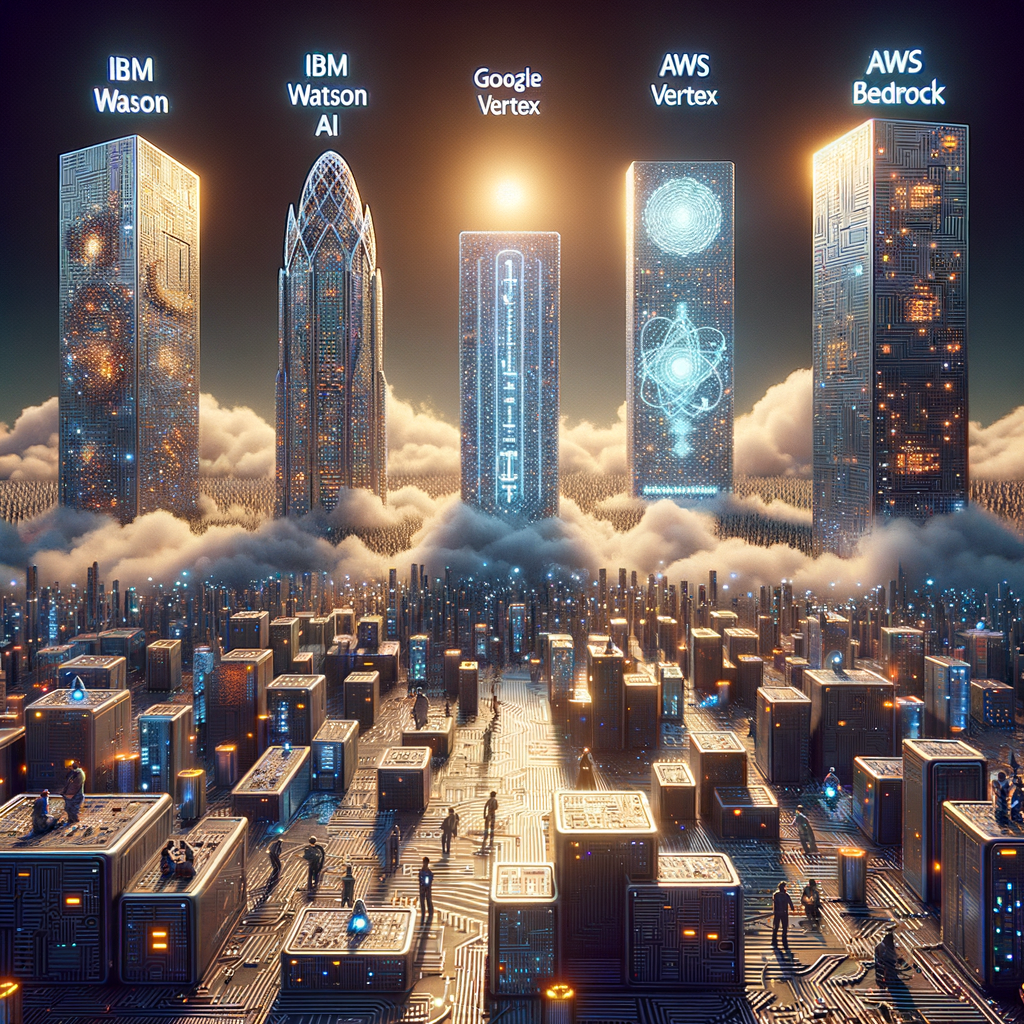
The agentic revolution is transforming the way software developers and businesses create intelligent applications. At its core, this revolution emphasizes building autonomous apps—applications that not only perform tasks but also make decisions, learn from data, and adapt dynamically to new information. With the advent of powerful AI platforms such as IBM Watson, Azure AI, Google Vertex, and AWS Bedrock, developers now have the tools to embed agent-like capabilities into their solutions, pushing the boundaries of automation and intelligent interaction.
What is the Agentic Revolution?
The agentic revolution refers to the shift from traditional software programs— which follow predefined instructions—towards autonomous agents capable of independent action. These agents can interpret user intent, reason through complex scenarios, and adjust their behavior without constant human intervention. This is a significant step beyond rule-based automation, leveraging AI to create systems that act more like collaborators or assistants rather than mere tools.
This shift is powered by advancements in natural language processing (NLP), machine learning (ML), reinforcement learning, and conversational AI, enabling applications to handle ambiguity, uncertainty, and evolving environments.

Key Platforms Driving Autonomous App Development
IBM Watson: Cognitive AI for Complex Decision-Making
IBM Watson has long been a pioneer in AI, known for its ability to process natural language and analyze large datasets. Watson’s suite of AI services allows developers to embed advanced NLP, machine learning, and knowledge graph capabilities into their apps.

By using Watson Assistant, for example, developers can create chatbots and virtual agents that understand context, respond naturally, and escalate issues intelligently. Watson Discovery offers powerful document retrieval and question-answering, enabling apps to autonomously sift through unstructured data to provide actionable insights. Together, these services help build applications that not only automate tasks but also reason and explain their decisions.
Azure AI: Integrating AI with Enterprise-Grade Cloud Services
Microsoft’s Azure AI platform provides a rich set of tools that empower developers to infuse autonomy into applications at scale. Azure Cognitive Services offer pre-built models for speech recognition, vision, language understanding, and anomaly detection, while Azure Machine Learning enables customized model development and deployment.
One of Azure’s standout features for agentic applications is the Azure Bot Service, which allows for the creation of intelligent conversational agents that can integrate seamlessly with business workflows and multiple channels. Azure’s deep integration with other Microsoft products, such as Power Platform and Dynamics 365, helps businesses create autonomous apps that can interact across complex organizational systems.
Google Vertex AI: Unified Machine Learning for Agentic Apps
Google Vertex AI is designed to simplify the development, deployment, and scaling of machine learning models, making it easier to build autonomous applications. Vertex AI integrates Google’s powerful AutoML and custom training pipelines, enabling developers to create tailored models that improve with experience.
Vertex AI’s capabilities extend to explainable AI, data labeling, and feature management, which are crucial for building trustworthy autonomous agents. Google’s strong expertise in NLP, vision, and recommendation systems also makes Vertex AI a prime choice for developers aiming to craft apps that can perceive, decide, and act with minimal human oversight.
AWS Bedrock: Foundation Models for Customizable Autonomy
AWS Bedrock is Amazon’s latest innovation, providing access to foundation models from leading AI providers, enabling developers to build and scale generative AI applications without managing infrastructure. By leveraging these pre-trained models, developers can rapidly create autonomous agents capable of understanding and generating human-like language, analyzing images, or making predictions.
AWS Bedrock supports customization and fine-tuning, allowing apps to adapt AI models to specific business contexts. Its integration with AWS’s extensive cloud ecosystem ensures that these agentic apps can operate reliably, securely, and at scale.
Building Autonomous Apps: Key Considerations
1. Understanding the Role of Autonomy
Developers should carefully define the level of autonomy required for their apps. Autonomy can range from simple task automation to fully independent agents capable of multi-step reasoning. Understanding the scope helps in selecting the right tools and models from these platforms.
2. Data Management and Privacy
Agentic apps often rely on vast amounts of data. Ensuring data quality, privacy, and compliance is essential. Platforms like IBM Watson and Azure AI provide robust security and governance tools that facilitate responsible AI deployment.
3. Human-in-the-Loop Systems
Despite autonomy, many applications benefit from human oversight, especially in critical decision-making scenarios. Designing human-in-the-loop workflows can enhance trust and reliability.
4. Scalability and Integration
Selecting a platform that integrates smoothly with existing systems and scales according to demand is crucial. Google Vertex AI and AWS Bedrock offer managed services that handle scaling, allowing developers to focus on innovation.
The Future of the Agentic Revolution
As AI technologies continue to evolve, the agentic revolution will accelerate the creation of intelligent systems capable of enhancing productivity, creativity, and decision-making across industries. Autonomous apps built with IBM Watson, Azure AI, Google Vertex, and AWS Bedrock will become more common, reshaping customer experiences, automating complex workflows, and enabling new business models.
Embracing these tools today means preparing for a future where software doesn’t just respond but thinks, learns, and acts independently—ushering in a new era of intelligent automation.
The agentic revolution is here, and with the power of cutting-edge AI platforms, building autonomous apps has never been more accessible or impactful. Whether you are a developer, business leader, or AI enthusiast, understanding and leveraging these platforms will be key to unlocking the next generation of intelligent applications.