The New Automation Stack: Integrating IBM, Microsoft, Google, and Amazon Into Agentic Workflows
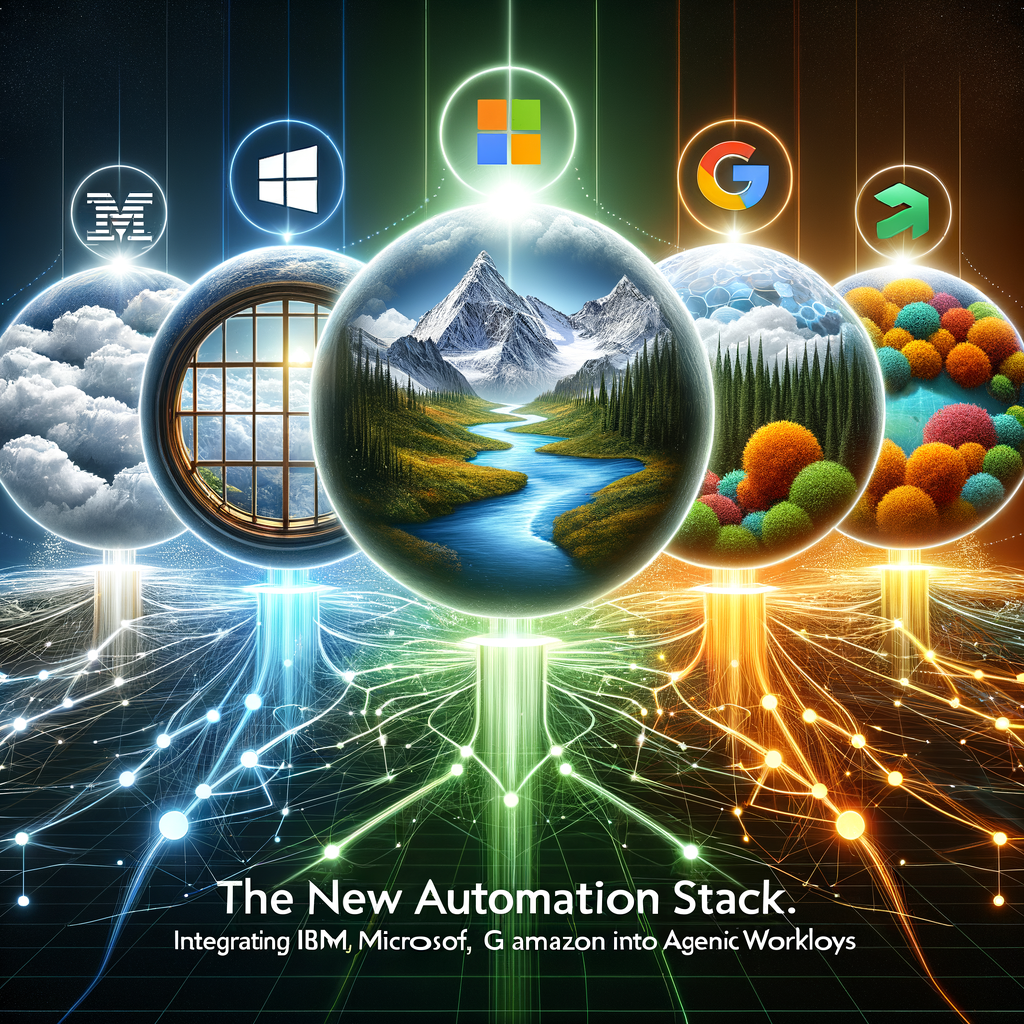
In today’s fast-evolving digital landscape, the new automation stack is rapidly transforming how businesses operate. Integrating major technology giants like IBM, Microsoft, Google, and Amazon into agentic workflows is reshaping the future of work by enabling intelligent, autonomous decision-making processes. This integration brings together the best tools, platforms, and cloud services, allowing enterprises to streamline operations, improve efficiency, and drive innovation at an unprecedented scale.
Understanding Agentic Workflows in Modern Automation
Agentic workflows refer to systems that empower software agents to act autonomously on behalf of users or organizations. These workflows go beyond traditional automation by embedding decision-making capabilities and adaptive behaviors into processes, allowing systems to respond dynamically to changing conditions. Instead of merely following predefined rules, agentic workflows can learn, reason, and optimize tasks continuously.
This shift demands an advanced automation stack that supports not only automation but also artificial intelligence (AI), machine learning (ML), natural language processing (NLP), and cloud computing. This is where the technology ecosystems of IBM, Microsoft, Google, and Amazon play pivotal roles.

How IBM Shapes the Automation Stack
IBM has been a pioneer in enterprise AI and automation solutions for decades. Its Watson AI platform delivers sophisticated cognitive capabilities that enable machines to understand, reason, and learn from data. IBM’s Robotic Process Automation (RPA) tools help organizations automate repetitive tasks while IBM Cloud provides scalable infrastructure and integration services.

In agentic workflows, IBM’s strengths lie in:
- AI-powered decision-making: Watson’s NLP and machine learning capabilities allow workflows to analyze unstructured data and extract actionable insights.
- Hybrid cloud environments: IBM supports seamless integration across on-premises and cloud systems, critical for complex, multi-source workflows.
- Security and governance: IBM’s focus on enterprise-grade security ensures that automated workflows comply with industry standards and regulations.
Microsoft’s Role in Empowering Agentic Workflows
Microsoft’s automation stack is deeply integrated with its Azure cloud platform and Microsoft Power Platform, which includes Power Automate, Power Apps, and Power BI. These tools empower citizen developers to create automated workflows with minimal coding while leveraging AI models available through Azure Cognitive Services.
Key contributions from Microsoft include:
- Low-code automation: Power Automate democratizes workflow creation, enabling a broad spectrum of users to design intelligent automation.
- AI integration: Azure’s AI and ML services enhance workflows with image recognition, language understanding, and predictive analytics.
- Enterprise collaboration: Integration with Microsoft 365 tools like Teams and SharePoint ensures automated workflows can trigger actions based on communications and document updates.
By combining these capabilities, Microsoft enables agentic workflows that seamlessly connect business processes with AI insights in familiar user environments.
Google’s Innovative Cloud AI in the Automation Stack
Google Cloud Platform (GCP) brings powerful AI and data analytics tools to the automation stack. With services like Vertex AI, AutoML, and Dialogflow, Google offers robust machine learning and conversational AI capabilities.
Google’s impact on agentic workflows includes:
- Scalable machine learning: Google’s AutoML tools enable organizations to build custom ML models tailored to their specific workflow needs without deep expertise.
- Conversational agents: Dialogflow supports natural language interactions, allowing workflows to engage users in dynamic conversations and guide processes.
- Big data analytics: Google’s data processing tools enable workflows to analyze large datasets for better decision-making and optimization.
Integrating Google’s AI-driven services facilitates the creation of adaptable, responsive workflows that improve user experience and operational agility.
Amazon Web Services (AWS) and Its Automation Ecosystem
AWS is a dominant player in cloud computing and offers an extensive suite of automation tools that contribute significantly to the new automation stack. AWS services such as Lambda for serverless computing, Step Functions for orchestrating workflows, and SageMaker for building ML models provide a comprehensive platform for agentic automation.
AWS’s key advantages include:
- Event-driven automation: Lambda allows workflows to respond instantly to events without managing servers, supporting highly scalable automation.
- Workflow orchestration: Step Functions coordinate complex multi-step workflows with error handling and retries, essential for autonomous systems.
- Machine learning at scale: SageMaker simplifies the deployment of ML models that drive decision-making within workflows.
By leveraging AWS, organizations can build highly resilient, scalable, and intelligent agentic workflows that adapt to evolving business needs.
Integrating the Giants: Building a Cohesive Automation Stack
While IBM, Microsoft, Google, and Amazon each offer unique strengths, the true power of the new automation stack comes from integrating their technologies into unified agentic workflows. Enterprises often face diverse operational environments, requiring hybrid approaches that combine multiple cloud platforms and AI capabilities.
Best Practices for Integration
- Adopt an open architecture: Use APIs and standards-based protocols to connect services from different vendors smoothly.
- Leverage multi-cloud strategies: Avoid vendor lock-in by distributing workloads across platforms that best fit specific automation needs.
- Prioritize interoperability: Employ middleware and integration tools that facilitate seamless communication between disparate systems.
- Implement centralized governance: Maintain consistent security, compliance, and monitoring across the integrated stack.
- Focus on user experience: Ensure that automation complements human roles by enabling transparency and control over autonomous agents.
Conclusion: The Future of Work with Agentic Automation
The emergence of the new automation stack, fueled by IBM, Microsoft, Google, and Amazon, signals a transformative shift toward intelligent, agentic workflows. These workflows empower organizations to operate more efficiently, make better decisions, and respond swiftly to change. As technology continues to advance, embracing a multi-vendor integration strategy will be crucial for businesses seeking to harness the full potential of automation and AI-driven autonomy.
By thoughtfully integrating these industry leaders’ offerings, companies can build sophisticated agentic workflows that redefine productivity and innovation for the digital age.