
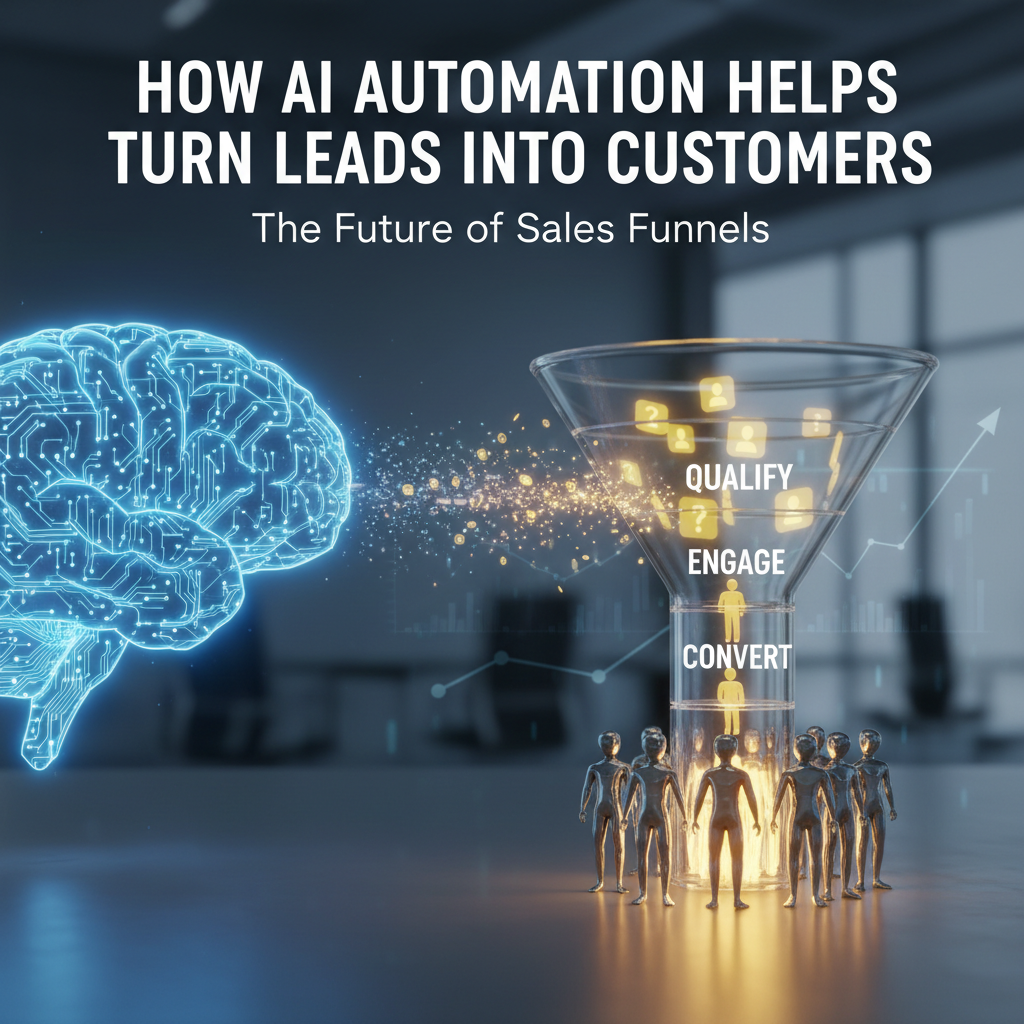
How AI Automation Helps Turn Leads Into Customers
Unlocking Growth Through Intelligent Systems
In today’s fast-paced digital marketplace, generating traffic is only half the battle. Many companies invest heavily in marketing campaigns, yet struggle with a common bottleneck: converting those initial inquiries into paying clients. Traditional follow-up methods are often too slow, leaving prospects waiting hours or even days for a response. Fortunately, how AI automation helps businesses turn more leads into paying customers has become a game-changer for modern sales pipelines. By deploying smart technology, organizations can engage prospects instantly, personalize interactions at scale, and close deals more efficiently than ever before.
The Power of Instant Engagement
Speed is one of the most critical factors in conversion. Research consistently shows that responding to a lead within the first few minutes drastically increases the likelihood of a sale. However, human teams cannot be online around the clock. AI-driven chat tools and automated response workflows bridge this gap seamlessly.
Instant Response Workflows
When a prospective client fills out a contact form or interacts with a digital ad, an automated system can trigger a personalized email, text, or WhatsApp message within seconds. This rapid acknowledgment satisfies the consumer’s desire for immediate information and keeps your brand top-of-mind. Instead of cooling off overnight, the prospect remains engaged while their interest is at its peak.

Conversational Chatbots
Modern chatbots do more than just drop generic greetings. Powered by advanced natural language processing, they can hold context-aware conversations, answer specific product questions, and even schedule discovery calls directly onto a sales representative’s calendar. This effortless interaction removes friction from the user journey.

Smart Qualification and Lead Scoring
Not every inquiry holds the same value. Sifting through unqualified prospects can drain a sales team’s energy and waste precious hours. Artificial intelligence revolutionizes this phase through predictive lead scoring.
- Behavioral Tracking: Systems monitor how a user interacts with your website, noting pages visited, resources downloaded, and emails opened.
- Data Analysis: Machine learning algorithms evaluate historical purchase data to identify patterns that match your best past customers.
- Prioritization: High-value prospects are immediately flagged for human intervention, while colder contacts receive automated nurturing content.
By streamlining this process, sales professionals can focus their expertise exclusively on warm buyers who are genuinely ready to make a purchase.
Personalized Nurturing at Scale
Conversion rarely happens on the first touchpoint. Building trust requires consistent, relevant communication over time. Manual nurturing is prone to human error and oversight, but automated sequences ensure that no lead falls through the cracks.
AI tools can dynamically adjust email content based on a user’s unique preferences and past behaviors. If a prospect shows interest in a particular service, the system automatically delivers case studies, pricing guides, or video testimonials tailored to that specific interest. This targeted approach fosters deep customer trust and gently guides them down the sales funnel toward a final transaction.
Conclusion
Integrating smart workflows into your sales architecture is no longer just an experimental luxury; it is a vital strategy for sustainable growth. By leveraging instant responses, intelligent qualification models, and hyper-targeted nurturing sequences, companies can dramatically improve their conversion efficiency. Embracing these digital tools ensures that every marketing dollar works harder, turning casual browsers into loyal, paying clients.