The Agentic Cloud: Leveraging Azure, AWS, Google Cloud, and IBM Cloud for Autonomous Systems
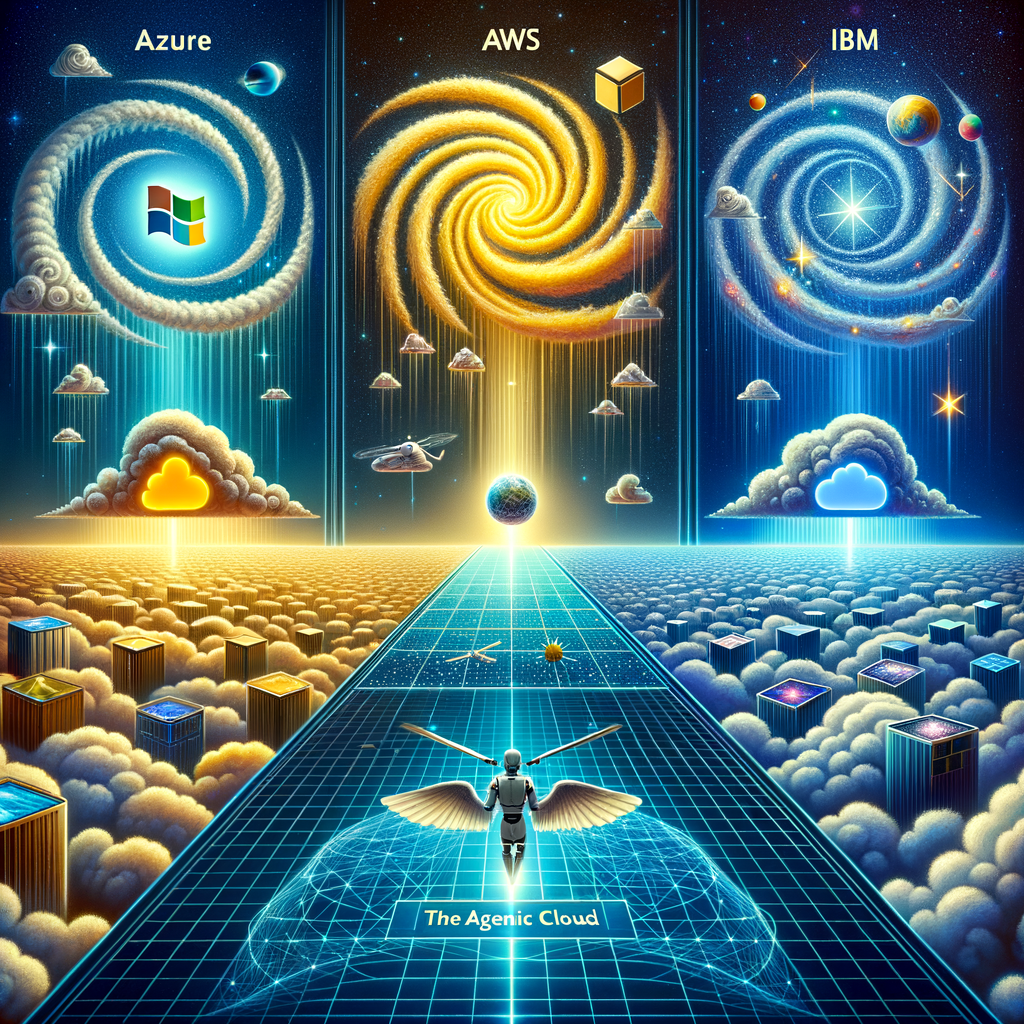
In the evolving landscape of technology, the concept of the Agentic Cloud has emerged as a transformative force. It refers to cloud infrastructures and services that empower autonomous systems—intelligent agents capable of making decisions, learning from data, and performing tasks with minimal human intervention. As industries increasingly rely on automation and artificial intelligence, leveraging leading cloud platforms such as Azure, AWS, Google Cloud, and IBM Cloud has become pivotal for developing and deploying these sophisticated systems.
Understanding the Agentic Cloud and Its Importance
The Agentic Cloud signifies a paradigm shift where cloud environments do more than just host applications; they actively support the autonomy and intelligence of software agents. These agents operate across diverse domains including robotics, IoT, autonomous vehicles, smart manufacturing, and personalized AI assistants.
Key characteristics of the Agentic Cloud include:

- Scalability: Handling massive data inputs and computational demands.
- Intelligence: Supporting machine learning, natural language processing, and decision-making algorithms.
- Interoperability: Seamlessly integrating with a variety of sensors, devices, and data sources.
- Security: Ensuring data privacy and safe autonomous operation.
By leveraging cloud services, organizations can accelerate the development of autonomous systems, reduce infrastructure overhead, and deploy intelligent agents globally.

Leveraging Azure for Agentic Cloud Solutions
Microsoft Azure offers a rich ecosystem tailored for building autonomous systems. Its AI and machine learning services, combined with powerful compute options, make it a top choice for developers.
Azure Cognitive Services and AI
Azure Cognitive Services provides pre-built APIs for vision, speech, language, and decision-making, allowing autonomous agents to perceive and interpret their environment effectively. For example, an autonomous drone can use Azure’s computer vision to identify obstacles or targets in real time.
Azure IoT and Edge Computing
Azure IoT Hub and Azure IoT Edge enable distributed intelligence by allowing agents to operate closer to data sources. Edge computing is critical for latency-sensitive applications such as autonomous vehicles where real-time decisions are vital.
Security and Compliance
With Azure’s robust security framework and compliance certifications, autonomous systems can trust the cloud to safeguard sensitive data and ensure regulatory adherence.
AWS: Powering Autonomous Systems at Scale
Amazon Web Services (AWS) brings a mature and vast portfolio of services that are ideal for creating and managing agentic cloud environments.
AWS SageMaker and Machine Learning
SageMaker simplifies the development, training, and deployment of machine learning models essential for agent autonomy. It supports a variety of frameworks and offers features like AutoML and reinforcement learning, crucial for continuous agent improvement.
Robotics and Simulation
AWS RoboMaker is a specialized service that facilitates robotics application development with integrated simulation, testing, and fleet management. It accelerates the creation of autonomous agents capable of operating in real-world scenarios.
Data Lakes and Analytics
AWS offers comprehensive data storage and analytics options, including Amazon S3 and Athena, enabling agents to process and learn from vast datasets efficiently.
Google Cloud: Driving Innovation in Autonomous Intelligence
Google Cloud Platform (GCP) is synonymous with innovation in AI and data analytics, making it a strong contender for agentic cloud applications.
AI and TensorFlow Integration
GCP’s AI Platform provides seamless integration with TensorFlow, one of the most popular machine learning frameworks. This allows developers to build sophisticated autonomous agents with advanced neural networks.
Big Data and Real-Time Processing
Services such as BigQuery and Dataflow allow autonomous systems to analyze streaming data in real-time, essential for scenarios like autonomous traffic management or real-time supply chain monitoring.
AutoML and Custom Models
Google Cloud’s AutoML services enable non-experts to train custom models, democratizing AI development and accelerating agent deployment across various sectors.
IBM Cloud: Enterprise-Grade Solutions for Autonomous Systems
IBM Cloud focuses on enterprise-grade solutions with a strong emphasis on AI, hybrid cloud capabilities, and security.
Watson AI for Cognitive Agents
IBM Watson’s suite of AI tools, including natural language understanding and visual recognition, empowers autonomous systems with human-like cognitive capabilities.
Hybrid and Multi-Cloud Flexibility
IBM Cloud’s hybrid cloud approach allows organizations to run autonomous systems across on-premises, private, and public clouds, providing flexibility and resilience.
Blockchain and Trustworthiness
For autonomous agents requiring secure, tamper-proof transaction records—such as in supply chains or autonomous finance—IBM’s blockchain services are invaluable.
Choosing the Right Cloud Platform for Your Agentic Cloud
Each major cloud provider offers unique strengths, making the choice dependent on specific project requirements:
- Azure excels in enterprise integration and edge computing.
- AWS offers unmatched scale and breadth of services.
- Google Cloud leads in AI innovation and big data analytics.
- IBM Cloud is ideal for hybrid deployments and cognitive AI.
Organizations should assess factors such as ease of integration, available AI tools, scalability needs, and security requirements when selecting a platform.
Conclusion
The Agentic Cloud represents the future of autonomous systems, where intelligent agents harness cloud capabilities to operate independently and efficiently. By leveraging the powerful services provided by Azure, AWS, Google Cloud, and IBM Cloud, developers and enterprises can accelerate innovation, improve system reliability, and unlock new possibilities across industries. As these platforms continue to evolve, the synergy between cloud computing and autonomous technology will only grow stronger, driving smarter, more responsive, and truly autonomous solutions worldwide.